How to Photograph Hoarfrost: A Winter Morning at the Vaskjala–Ülemiste Canal
The frost had not changed the scale of the landscape. It had changed what deserved attention. Along the Vaskjala–Ülemiste canal, dry seed heads, grass and low leaves carried more detail than the pale sky. The engineered banks still ran through the fields with their usual blunt geometry, but every stem close to the water had acquired a white edge.
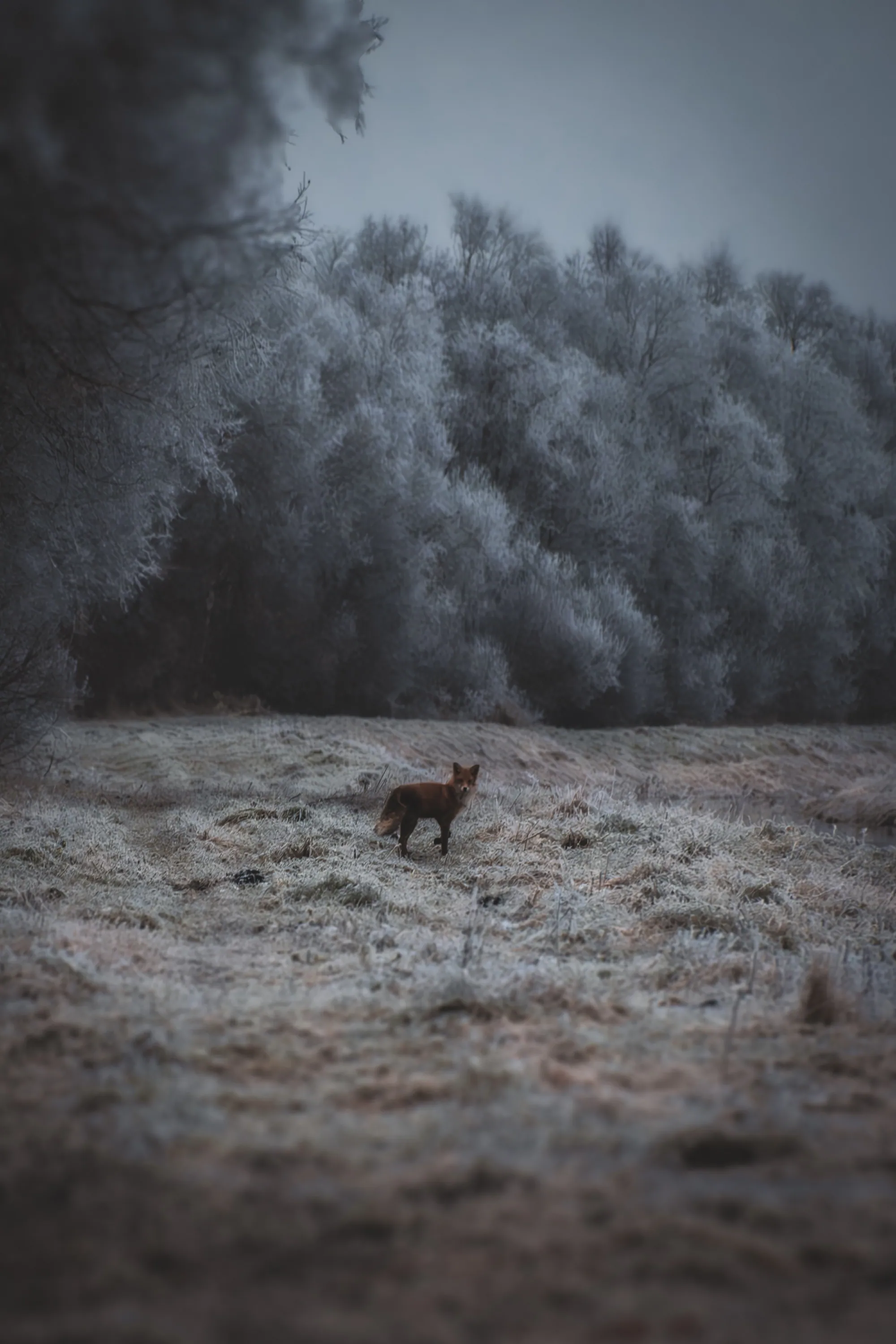
I had stopped beside one patch of vegetation and was working slowly through small changes in camera height. That stillness became the condition for the morning’s other photograph. A fox walked into the open field, stopped at a distance and looked towards me. I did not call, follow or offer food. I kept the camera where it was and made a short sequence before it moved on.
A water channel in a working landscape
The Vaskjala–Ülemiste canal is not a nature trail. It is a roughly 10.8-kilometre artificial watercourse connecting the Vaskjala reservoir on the Pirita River with Lake Ülemiste, and it forms part of Tallinn’s surface-water supply system. The predecessor channel was completed in 1922; reconstruction and the Vaskjala control structure followed in 1970, allowing water to move towards Ülemiste by gravity at up to 6 cubic metres per second.
That function explains the photographic character of the place. The banks are engineered, the line of water is comparatively direct, and service tracks run along parts of it. Beyond them are fields, hedges, rough grass, thistles and small stands of trees. Rae Manor nearby belongs to the same inhabited cultural landscape. This is not untouched country, and the pictures become more specific when the infrastructure is allowed to remain part of the description.
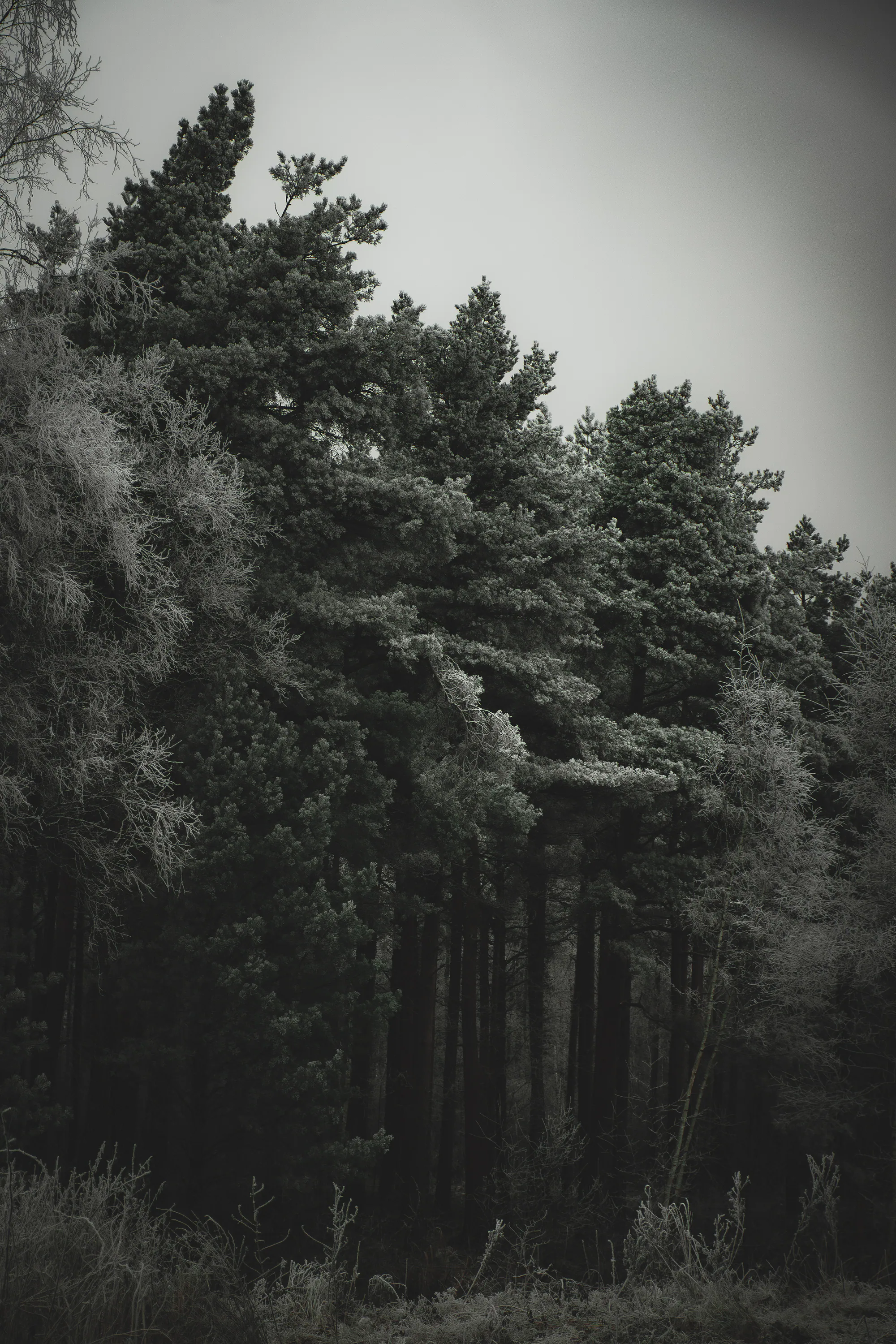
The canal’s straightness can provide a strong line, but it does not need to become the predictable centre of every frame. I found more useful structure by looking across the bank: dark conifers behind pale scrub, one frost-heavy plant against an even sky, and repeated grass stems arranged by the narrow angle of a telephoto lens.
Why frost gathers beside water
Heavy crystalline frost needs moisture, cold surfaces and the right overnight weather. During clear, calm conditions, the ground and plants lose heat by radiation. When a surface cools sufficiently, water vapour can deposit directly as ice rather than first becoming liquid. Open water and wet ground can add moisture to the local air, so vegetation near a canal may receive a heavier coating than a drier part of the same field. Fog, wind and small temperature differences still matter; proximity to water does not guarantee frost.
That distinction is useful when planning frost photography in Estonia. I look less for snowfall than for a still cold night, high humidity and a morning without strong wind. A garden, drainage ditch or ordinary field edge can be enough. The frost does the visual work by separating structures that pass unnoticed in summer.
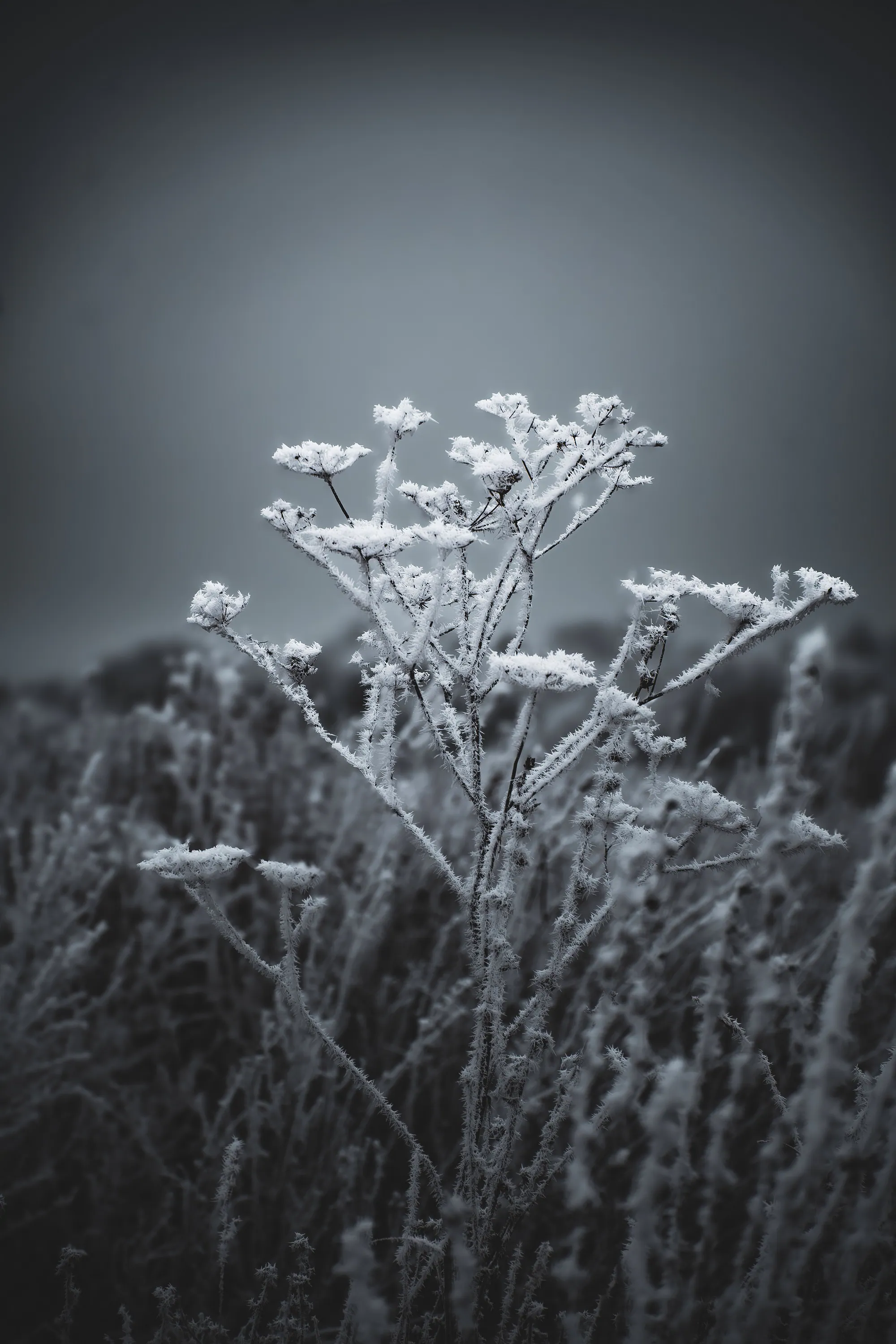
To photograph frost close-up, first choose the background, then the plant. A shaded hedge, dark woodland or the water itself can become almost black when it sits well behind a bright frost edge. Lower the camera until the brightest crystals clear the clutter, use a short telephoto or macro lens near its wider aperture, and focus on the front edge that defines the subject. Autofocus can jump between ice needles; a single AF point or magnified manual focus is more reliable.
There is no single low-key frost setting. As a starting point, f/4–f/8 gives enough depth for a selected edge while allowing the background to soften. Choose a shutter speed that freezes wind movement—often 1/200 second or faster for an unsupported telephoto—and raise ISO when needed. A black background may persuade the meter to overexpose the crystals, while a wide white field may make the camera render frost too grey. In both cases, check the histogram and highlight warning rather than trusting brightness compensation by habit.
When the field becomes the subject
Not every frost picture needs one perfect stem. In the wider vegetation study, the eye moves from a blurred near layer through the upright seed heads and into the grey distance. At 85mm, the field became dense enough to feel continuous without flattening every plant into one surface. The centre stem is only slightly more prominent than its neighbours, which is enough.
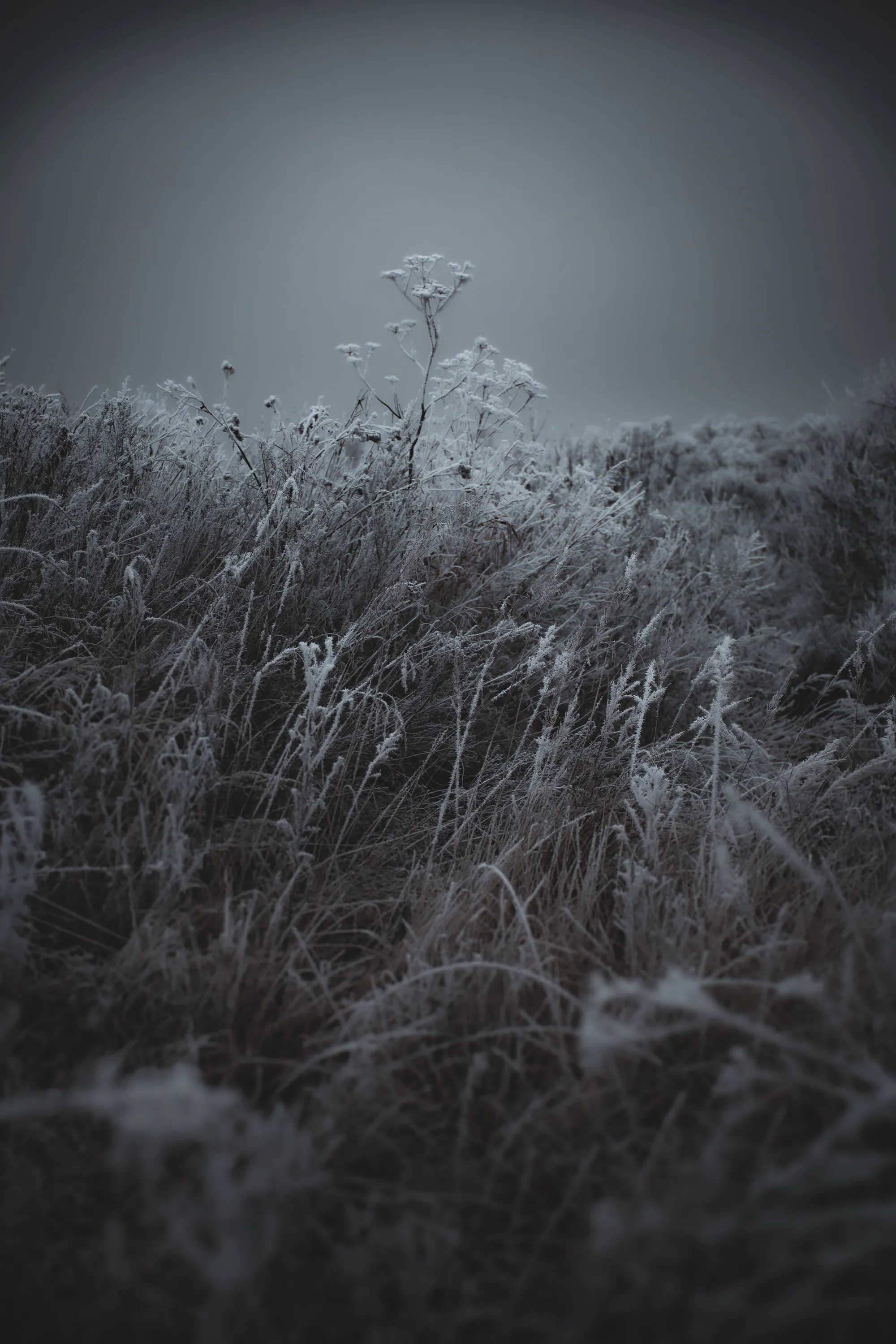
Overcast winter light suits this kind of frame because the contrast comes from layers rather than direct sun. Under clear low sunlight I would look instead for backlighting: ice needles brighten when the light passes through or catches their edges, while a distant shaded background remains dark. The light should reveal the crystal structure, not merely brighten the whole plant.
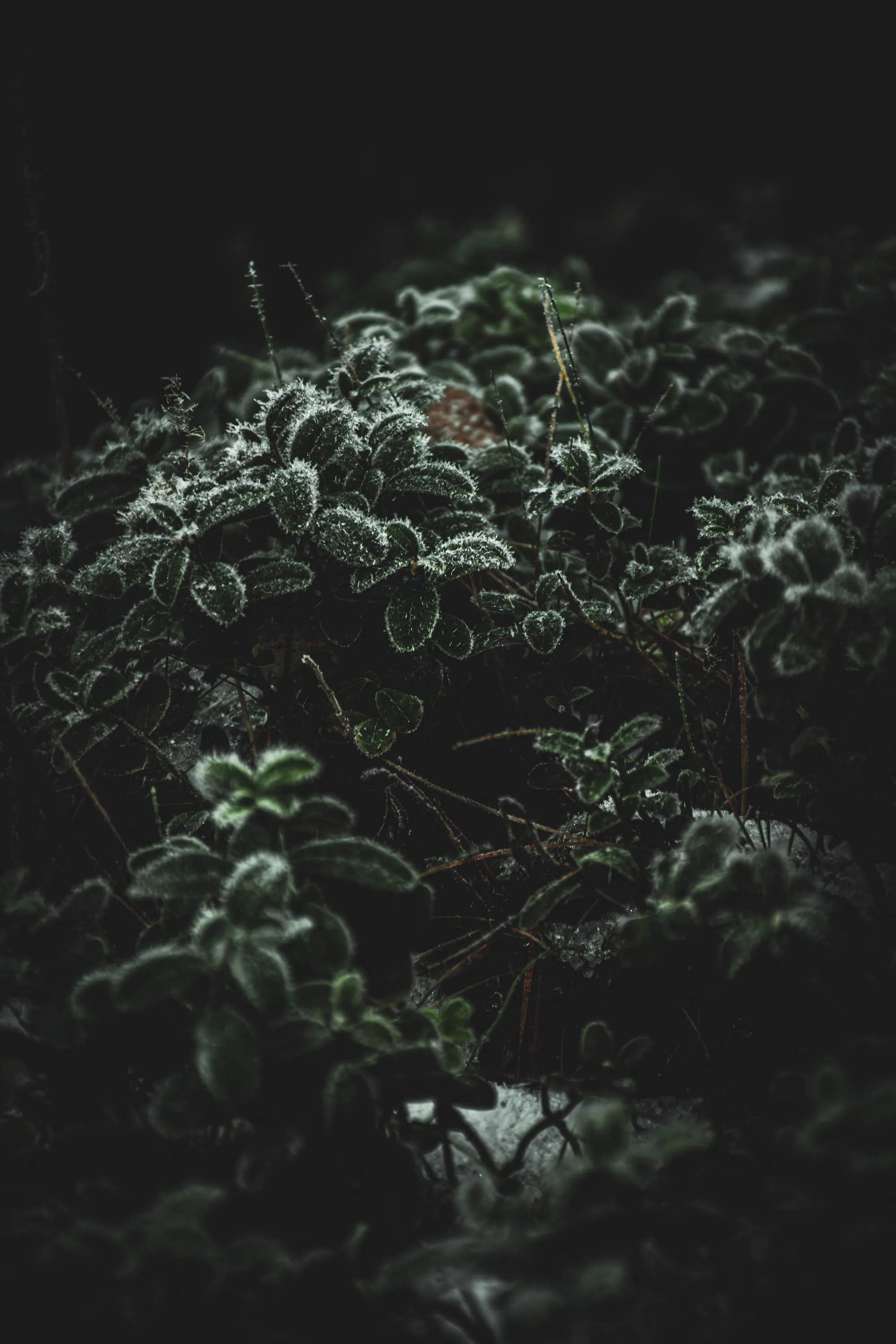
The same restraint applies in the edit. Set white balance cool enough to retain the morning but not so blue that neutral frost becomes cyan. Establish the white point without clipping the crystal tips, then open only the shadows that contain useful leaf or stem texture. A small local dodge along a frost edge can help; heavy global Clarity or Dehaze makes fine ice look brittle and synthetic. My moody forest editing workflow is a useful starting point for protecting dark detail, while the Moody Dark preset still needs to be judged frame by frame.
The fox was not the plan
The fox appeared after I had already been stationary for some time. That matters more than any claim about this canal as a wildlife location. It was one encounter on one morning, not a sighting a visitor should expect. The animal stopped long enough for me to keep the focus point on its head and make the picture at 140mm on an APS-C camera—approximately the angle of view of 210mm on full frame—without reducing the distance between us.
Wildlife photography without disturbance begins by letting distance govern the photograph. Use the longest practical focal length, keep movement slow, do not bait or call, and never close the gap merely because the animal looks towards the camera. If it changes direction, freezes repeatedly, lowers its body or otherwise appears uneasy, stop and retreat. A clean background and perfect head turn are not worth altering its behaviour.
I placed the fox low in the open field and left room around its line of attention. The pale ground separated its warm brown-red coat without needing an aggressively cold grade. A faster shutter would have been necessary if it had begun to run; because it paused, the frame could keep the subdued light and environmental space that explain the encounter.
Working carefully along the bank
Parts of the canal have track-like access beside the bank, but I could not confirm an official marked walking route or continuous public access. Check current mapping, signs and land boundaries before visiting, remain outside fenced or operational areas, and do not treat the Vaskjala control structure as a recreation site. The bank can be steep, wet and icy; secure footing matters more than a lower camera angle.
Cold also changes the camera routine. Keep a spare battery in an inner pocket, carry a dry lens cloth, and put the camera in a closed bag before moving into a warm car or building so condensation forms on the bag rather than inside the equipment. A tripod helps with static tree lines in low light, but for close vegetation I prefer enough ISO to respond to small movements in the grass.
In summer, green vegetation and insects obscure much of the canal bank’s small structure. Autumn leaves the field wetter and more muted; spring returns open water and thawed ground. Winter frost is brief because it makes the most ordinary plants legible before sun, wind or rising temperature removes the edge.
That was also why the fox belongs in this series. The photograph did not come from pursuing a rare scene. It came from giving an ordinary place enough time: first for the ice on a leaf to become a subject, and then for an animal already sharing the field to decide that I was far enough away to remain where it was.
For another study of moisture simplifying a landscape, see how I photograph fog in forests. For a marked trail where pale water and wetland pines carry the place narrative, continue with the Valgejärve photo trail.
Discussion
Thoughts on this story?
A quiet place for questions, experience and considered discussion.
Discussion guidelines
Stay relevant and constructive. No spam or harassment; links may be moderated.
Opening the discussion…