Tallinn Photography Locations: 7 Places for Nature and Urban Photos
59.4° N 24.8° E TALLINN, ESTONIA 2026 No. 01 / 18
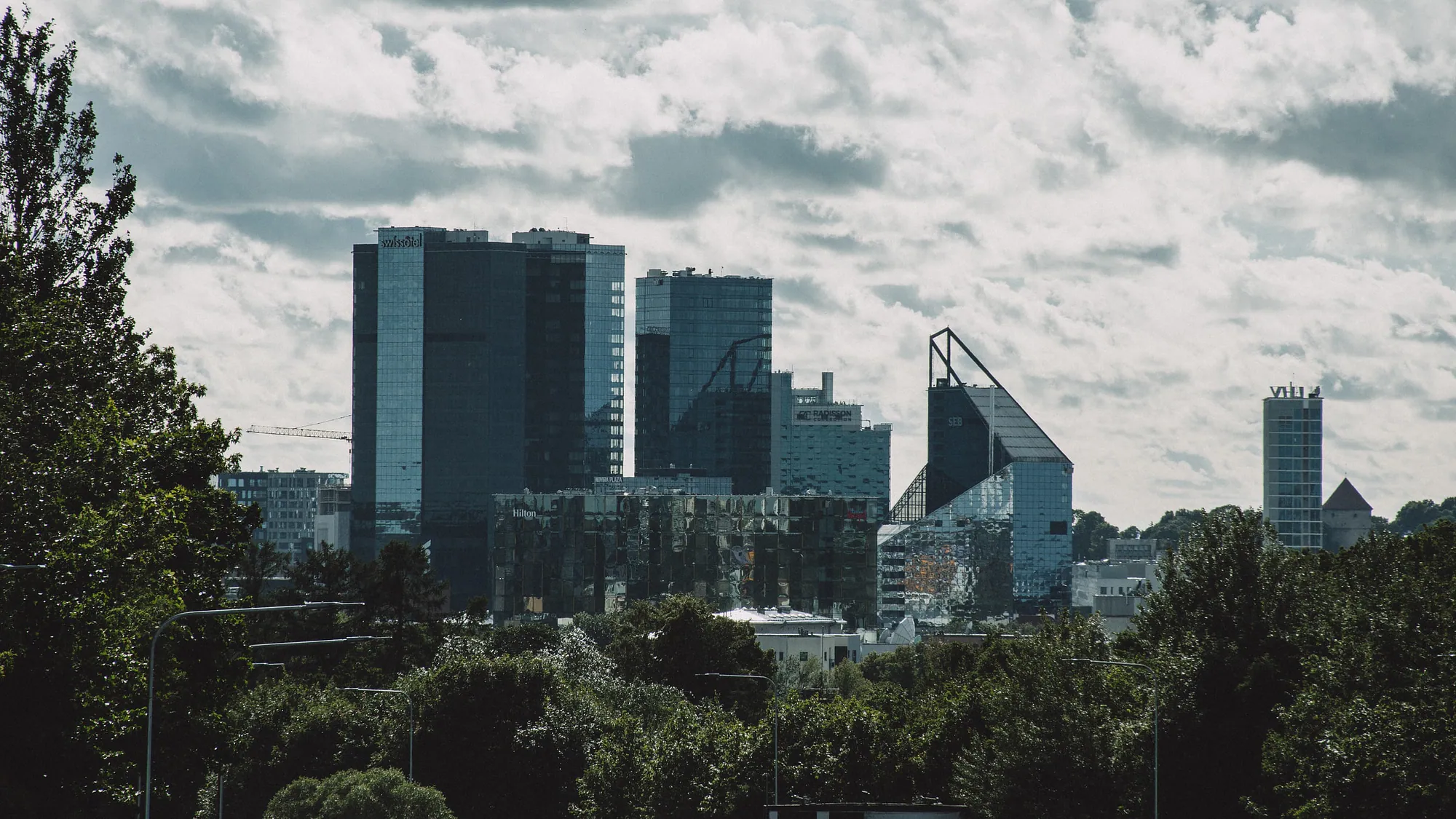
The most useful Tallinn photography locations are not interchangeable. Choose Kadriorg for ordered park geometry, Kopli for industrial and residential layers, Astangu for limestone and woodland, Maarjamäe for monumental form, Paljassaare for coast and birdlife, Järve for compressed pine forest, and Pääsküla for paths through a wooded wetland. The right place is the one that already contains the kind of photograph you want to make.
Tallinn is compact enough to place a formal park, an industrial peninsula, a memorial landscape and several distinct green areas within one city. That variety can also make an unspecific photo walk frustrating. A wide lens and bright sky do not solve every place. Decide first whether the picture needs repetition, texture, depth, open space or a moving subject; then choose the location and light that make that structure visible.
Tallinn photography locations at a glance
| Location | Best suited to | Main subjects | Light to look for | Practical considerations |
|---|---|---|---|---|
| Kadriorg | Ordered landscape and quiet street photography | Tree-lined avenues, lawns, ponds, palace-and-park relationships | Side light that divides paths and trees; overcast for restrained architecture | A used public park: keep paths clear and expect people in the frame |
| Kopli | Urban photography with visible change | Trams, brick, factory windows, housing, vegetation | Bright overcast for wall detail; low angled light for relief | Work from public streets, paths and parks; industrial or damaged buildings are not permission to enter |
| Astangu | Layered nature with geological and historical traces | Woodland, limestone, grassland, exterior views of military remains | Overcast after rain for stone and foliage; directional light at meadow edges | There is no single official circular route; keep away from tunnels and signed or fenced areas |
| Maarjamäe | Minimal, architectural and contemplative photographs | Memorial walls, the central sculpture, paths, trees and open sky | Fog or flat light for tonal separation; side light for surface relief | Treat the memorial as a place of remembrance, especially during ceremonies |
| Paljassaare | Coastal landscape and wildlife within the city | Reeds, shallow water, shore, birds and port infrastructure | Low coastal light; overcast for reeds; sufficient light for fast bird shutter speeds | A protected area with seasonal restrictions; remain on permitted routes and give wildlife space |
| Järve | Dense woodland with an urban edge | Pine trunks, moss, paths, railway and found human details | Low side light or mist that separates repeated trunks | A shared exercise trail; do not block runners, cyclists or ski tracks |
| Pääsküla | Path-led woodland and wetland detail | Boardwalks, drainage channels, birch, pine and seasonal ground texture | Soft overcast, mist, frost or thin snow | Much of the former bog is forested; stay on the route around soft ground and channels |
Kadriorg: structure inside a living park
Choose Kadriorg when the photograph needs order. Straight avenues, clipped edges, mature trees and open lawns create lines that can be read immediately, while ponds and nearby buildings let the designed landscape meet the city. The Baroque palace and park ensemble is one part of that visual identity, but the quieter park corridors often give a cleaner photograph than a frontal record of the palace.
Begin with alignment. Stand centrally only when symmetry is the subject; otherwise move far enough aside for one row of trees to carry more weight than the other. A medium focal length tightens the spacing between trunks without pulling excessive sky or path into the frame. Side light is useful because it breaks a green corridor into alternating areas of illumination and shade. Under harder light, expose for the brightest useful patch rather than lifting the whole park later.
The selected photograph shows a path curving through mature trees beneath a dense green canopy. Its strength is not greenery alone. The path supplies direction, repeated trunks control the sides, and the brighter patches give the eye somewhere to arrive. Choose Kadriorg over Järve when formal spacing matters more than woodland density, and over Kopli when you want continuity rather than collision between surfaces. It remains a public park, so a cyclist or walker can become scale and timing rather than an obstacle to an empty frame.
Kopli: read the joins between materials
Choose Kopli when the picture depends on contrast between things of unequal age. Tram rails, overhead lines, brick, repaired render, residential details and plants on disturbed ground can occupy the same short walk. The peninsula has an industrial legacy, but its parks, housing and coast prevent that history from becoming the only available picture.
Look for joins rather than landmarks: weeds against a red door, new housing behind an older wall, or a tram held between repeated poles. Photograph a façade nearly square-on when window rhythm and surface repair are the subject. Use a moderate telephoto when rails, cables, trees and distant structures need to stack into one compressed plane. Bright overcast protects pale render and keeps detail in dark openings; lower angled light is better when shallow brick relief needs to cast a readable shadow.
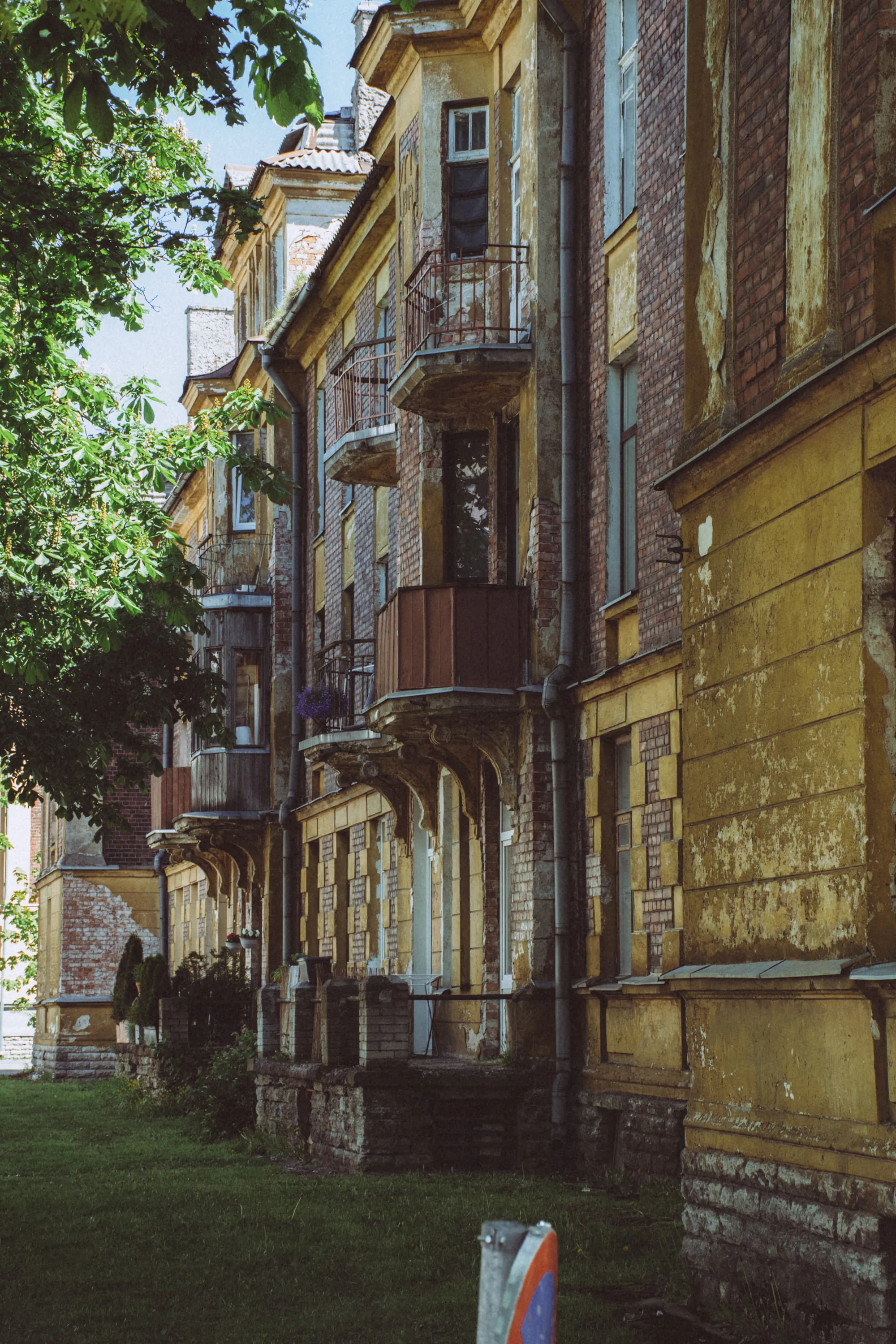
The selected frame uses the narrow space between weathered residential façades as its subject. Repeated windows establish order, while patched surfaces and small balconies keep the street from becoming sterile. Choose Kopli over Maarjamäe for accumulated, irregular history rather than controlled monumental geometry. Stay on public streets, paths and parks: a broken opening or apparently unused yard does not grant access.
Astangu: build depth from stone, trees and grass
Choose Astangu when a nature photograph needs several kinds of ground. Woodland gathers beneath the Mäeküla limestone escarpment, then opens into grass and scrub; military remains add another layer without turning the area into an urban-exploration site. The wider Astangu–Mäeküla landscape contains valuable natural communities and cultural remains, while the formally protected Astangu habitat is a more specific area. Do not treat the whole district as one uniform reserve.
In the woods, identify one trunk, pale rock edge or bend in the path as the anchor. Then move sideways until nearby branches stop merging with it. A normal-to-short-telephoto view helps separate near, middle and distant layers while excluding blank sky. After rain, limestone, moss and leaves hold different surface reflections; reduce glare carefully, because removing it completely can also remove the evidence of wetness. At the meadow edge, a longer lens can isolate bright seed heads against shaded woodland without leaving the path.
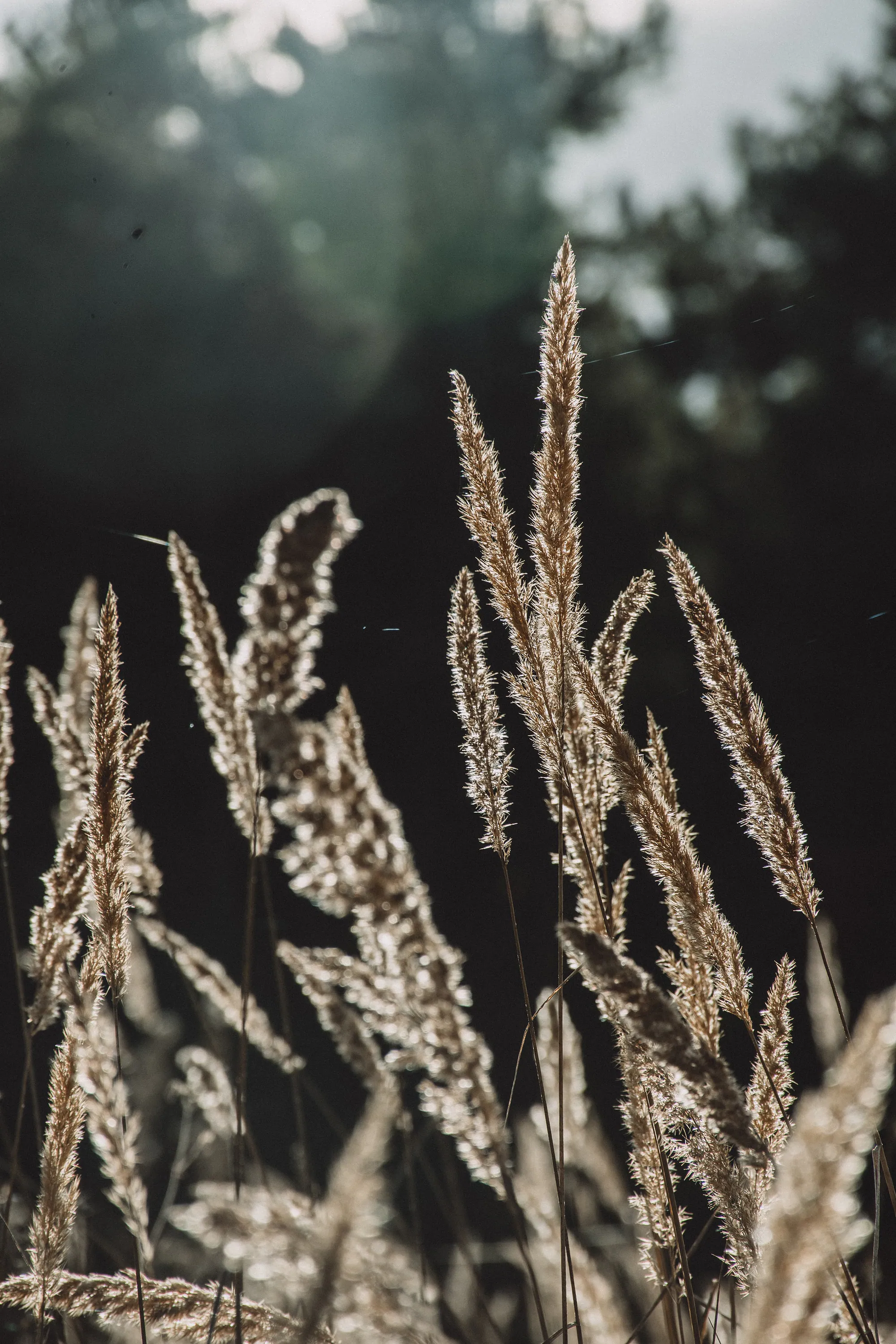
The selected detail works through rhythm and separation: backlit grass heads rise from a dark field, with each small shift in height keeping the pattern from becoming uniform. Choose Astangu over Järve when changes in terrain matter more than repeated pine trunks. There is no single official marked loop. Keep out of tunnel interiors and away from fenced or signed areas; the underground spaces are hazardous and important to bats.
Maarjamäe: let absence carry weight
Choose Maarjamäe when the photograph needs geometry, restraint and emotional space. The selected image is of the Estonian Victims of Communism Memorial, not Maarjamäe Palace. These are separate places nearby and should not be folded into one vague attraction. The memorial is dedicated to people from Estonia who suffered under Soviet terror; that meaning should govern both behaviour and framing.
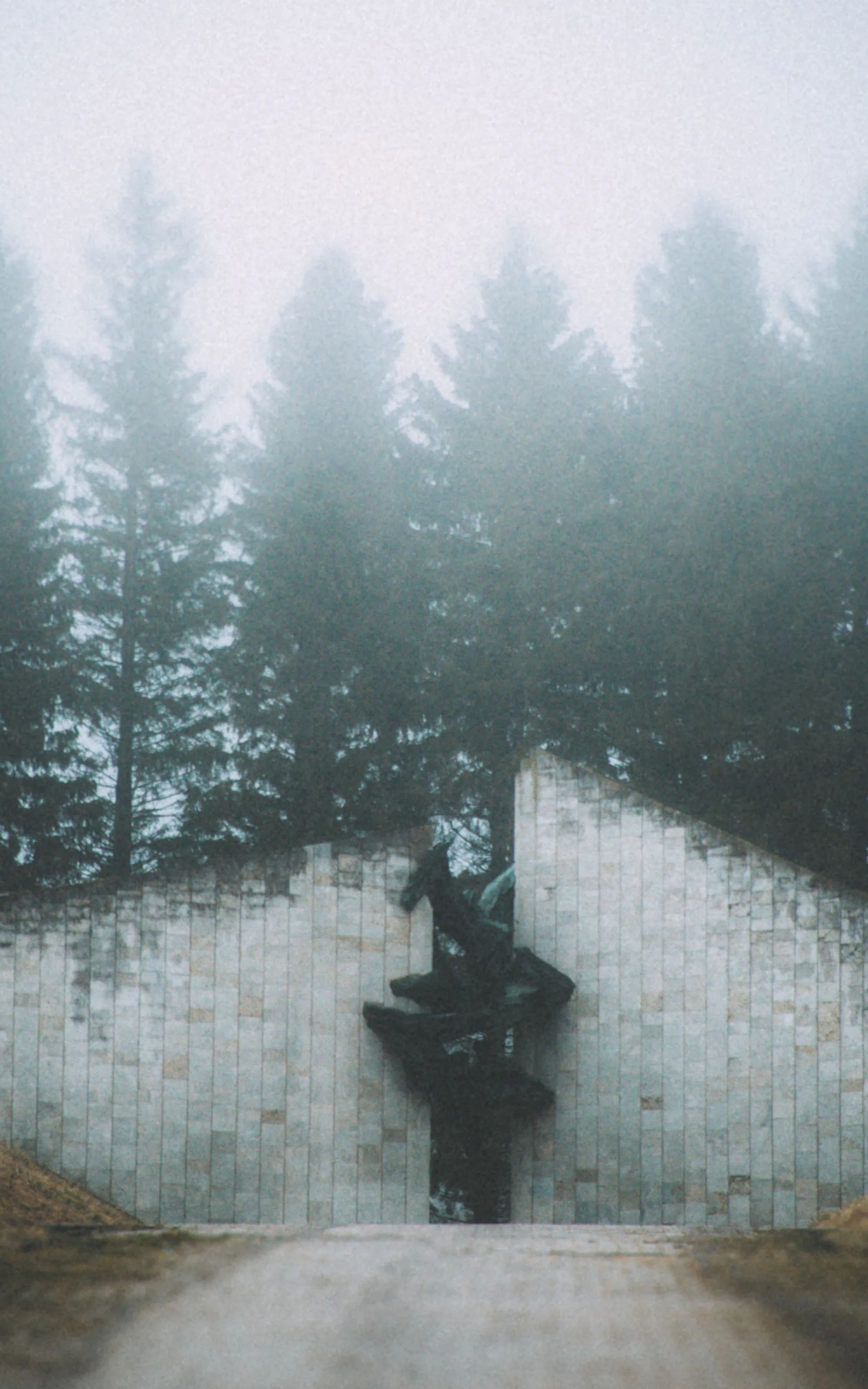
The photograph centres the memorial’s sculpture within a break in the pale, angular wall. Dark conifers rise behind it and disappear into fog. The structure is almost symmetrical, but not inert: the descending wall edges draw inward, while the dark figure interrupts both the stone grid and the soft verticals of the trees. A longer focal length would compress those layers further; a wider view would explain more of the memorial but reduce the figure’s visual weight.
Fog is useful here because it lowers the contrast of the trees without erasing their outline, leaving the sculpture as the darkest anchor. In clear side light, concentrate instead on wall relief, shadow and human scale. Choose Maarjamäe over Kadriorg when negative space and hard form matter more than decorative order. Photograph quietly, do not direct people using the memorial as props, and yield space during commemorations.
Paljassaare: simplify the meeting of water and city
Choose Paljassaare when the frame needs a horizon, moving reeds, birds or the friction between coast and port. The peninsula contains shallow water, reedbeds, wet grassland and patches of woodland; cranes, tanks and ships remain part of the view. Including infrastructure can make the photograph more truthful and give the low coastal landscape scale.
Decide whether the subject is sky, water or a smaller living form before placing the horizon. If neither sky nor foreground carries information, narrow the frame rather than dividing it evenly. Reeds become orderly when a long lens selects one plane and leaves a quiet tonal field behind it. For birds, distance comes first: use a long lens from a permitted path or observation point, and stop if your position changes the animal’s behaviour. A sighting is never guaranteed.
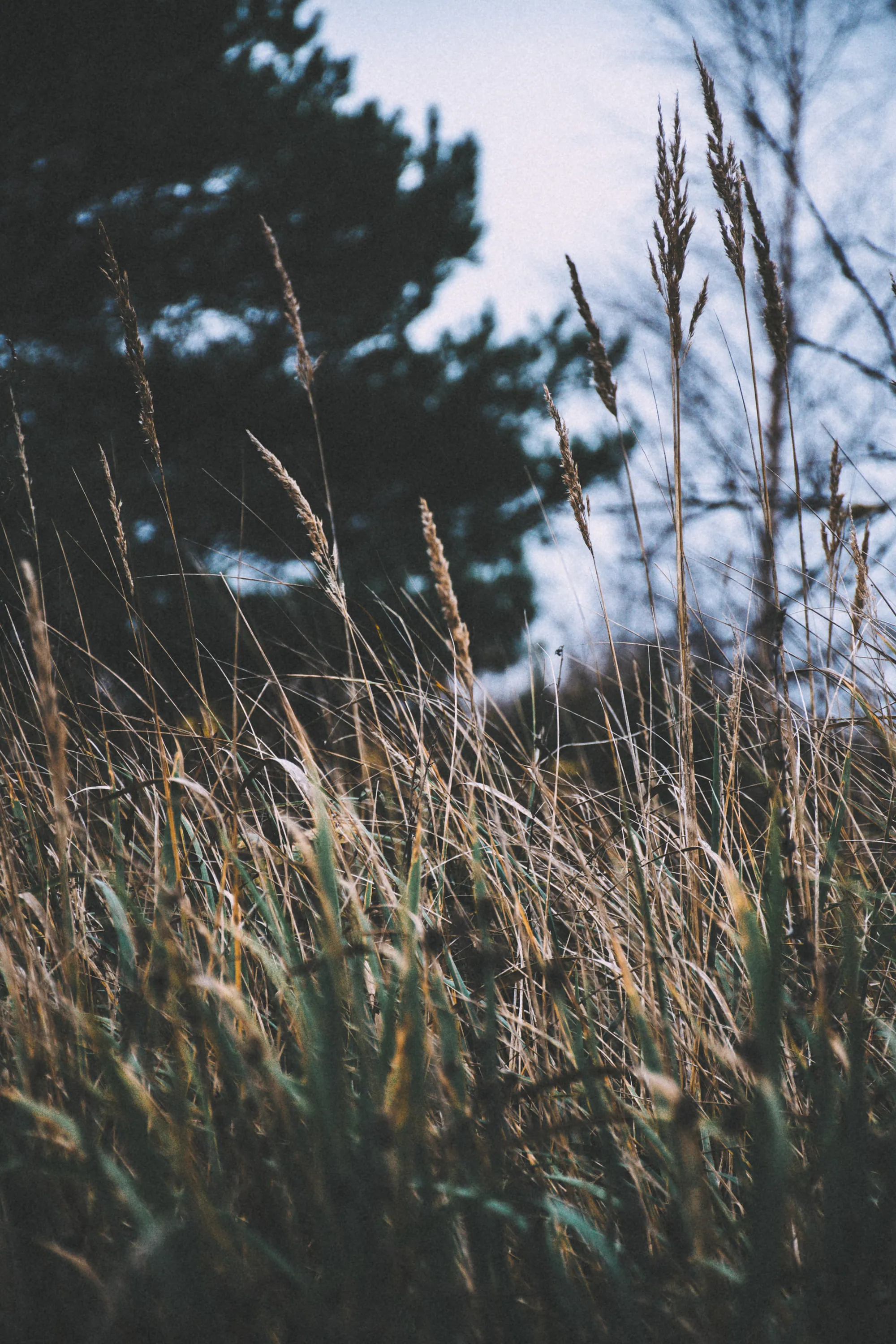
The selected photograph stays with the coastal vegetation rather than waiting for a bird. Repeated grass heads and low scrub hold the subdued light, while the tight frame keeps the nearby port outside the picture without denying that it is there. Choose Paljassaare over Pääsküla for open coastal space and possible wildlife, and over Kopli when the natural foreground should dominate the industrial edge. Paljassaare includes a protected conservation area, so follow current signs and seasonal restrictions.
Järve: organise a forest of repeated trunks
Choose Järve when you want woodland compression without leaving the city’s infrastructure behind. The confirmed location is Järve Health Trail: pine forest bounded by major roads and railway. Its photographic identity comes from that pressure. Inside the trees, trunks repeat in narrow layers; turn towards the edge and signals, lines or buildings return to the frame.
A wide lens can collect too many equal trunks. Start with a short telephoto and select one dark trunk or small object as the anchor, then use successive rows as lighter or softer planes. Change position before changing aperture: a step sideways can separate three merged trunks more effectively than shallow focus. Side light reveals the low sandy relief through moss and bark texture, while mist reduces distant contrast. Keep the edit dark only where differences between bark, ground and background remain visible.
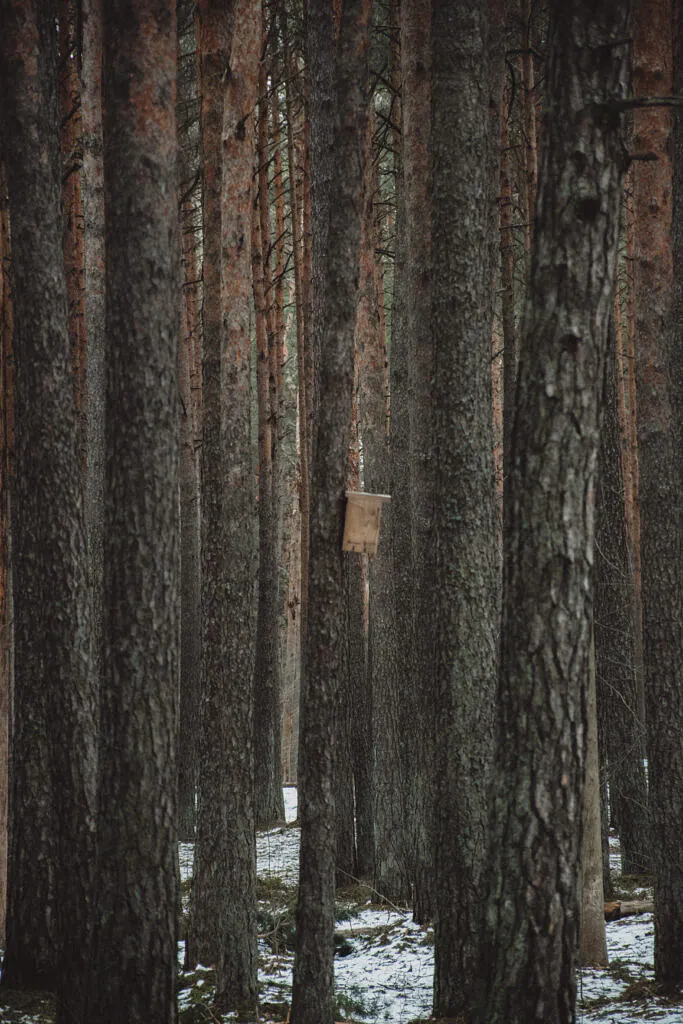
The selected photograph shows a bird box among dense pine trunks. Its small, simple shape interrupts the vertical rhythm without overwhelming the place. Choose Järve over Astangu for consistent repetition, and over Pääsküla when rail-and-road context belongs in the story. The lit exercise route is shared by runners, cyclists and, in winter, skiers, so keep supports and bags clear of the active track.
Pääsküla: use the route to explain a changed wetland
Choose Pääsküla when a path should carry the photograph through wet woodland. Despite the name, it should not be imagined as an uninterrupted open bog. Tallinn’s official account says the area has been drained and is now about 90 per cent forested. Boardwalk, surfaced route, drainage channels, young pines and birches therefore describe the place more accurately than an invented wide horizon.
Lowering the camera makes a boardwalk visually stronger, but first check that its edges lead toward a distinct turn, bright interval or group of trees. Around repeated trunks, a longer focal length can make mist and tonal depth more visible. Frost, thin snow and wet needles give small differences in luminance; expose pale surfaces carefully and retain colour in bark and vegetation rather than forcing the whole frame toward white and black.
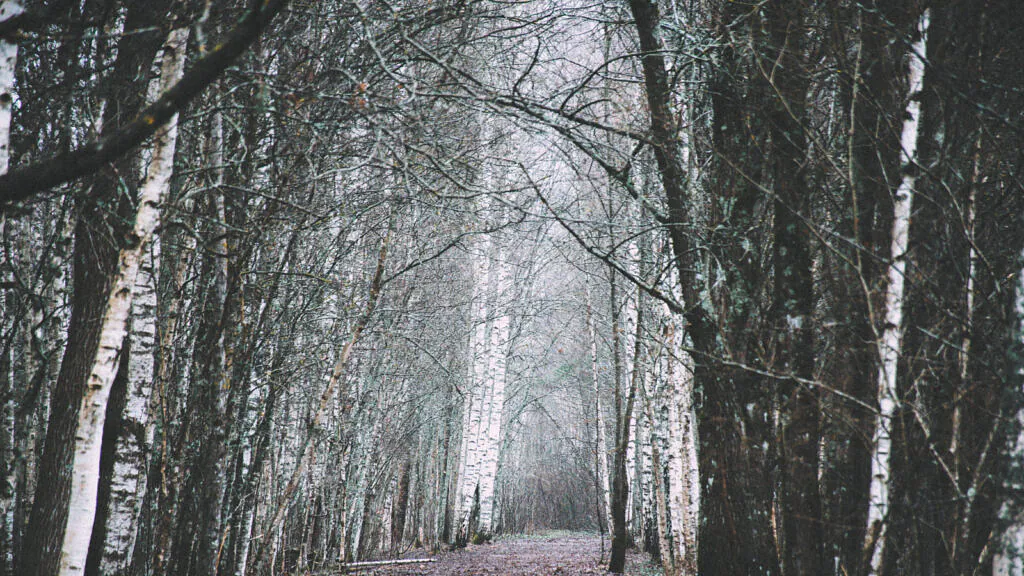
The selected winter image shows thin snow in birch woodland. Pale trunks carry the flat light into the scene, while darker branches prevent the photograph from becoming a featureless high-key field. Choose Pääsküla over Paljassaare for enclosure and leading lines, and over Järve when wetland traces matter more than hard urban boundaries. It is a municipal protected area with several trails; remain on the route around soft peat and drainage channels.
How to choose your location
Choose by visual problem. If you want strong leading lines, begin with Kadriorg’s avenues or Pääsküla’s boardwalk. For repeated forms, decide whether you prefer Kopli’s constructed grid or Järve’s pine trunks. Astangu suits photographs that need a transition between enclosed woodland and open ground. Maarjamäe gives hard geometry and deliberate negative space. Paljassaare gives the widest horizon and the greatest chance of a wildlife subject, but never a promise of one.
Light then refines the choice. Overcast keeps industrial and architectural surfaces readable. Side light reveals relief in bark, stone and ordered planting. Fog separates layers in forest and around monumental forms. Faster coastal light allows movement to be held in reeds or wings. None of these conditions makes a location automatically good; each makes a particular relationship easier to see.
The practical sequence is simple: name the photograph, select the environment, then wait for the light. Tallinn offers all seven within the city, but the strongest day rarely comes from trying to collect them all.
Discussion
Thoughts on this story?
A quiet place for questions, experience and considered discussion.
Discussion guidelines
Stay relevant and constructive. No spam or harassment; links may be moderated.
Opening the discussion…